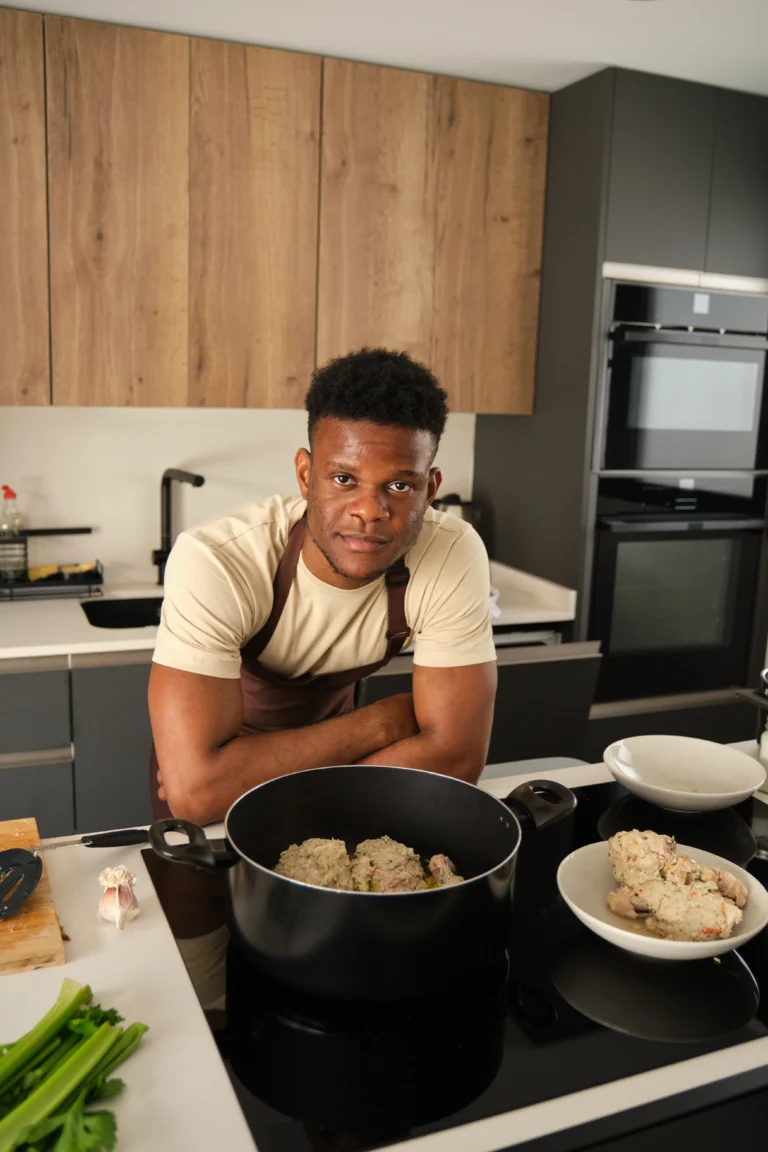

Korean Rolled Omelette (Gyeran Mari). I’m Daniel, and I started Reciqa because I truly believe that the best moments happen when we share food. For me, cooking isn’t about complicated techniques; it’s about creating simple, comforting dishes that bring people closer together. Whether it’s a hearty weeknight dinner or a special side dish, I want to share recipes that feel joyful and achievable for everyone.
When it comes to simple perfection, nothing beats the visual appeal and delicate flavor of Gyeran Mari. You see these beautiful, layered egg rolls in Korean dramas, and you think, “Wow, that looks hard!” But trust me, it is one of the easiest, quickest dishes you can master. It takes less than twenty minutes from start to finish, and it adds such a bright, elegant touch to any plate. This recipe is proof that sometimes the most beautiful food is also the simplest.
I’ve spent years perfecting the roll so it doesn’t tear or fall apart mid-cook. Once you get the hang of that low-and-slow rolling technique, you’ll be making this every week. It’s perfect as a side dish, packed into lunchboxes, or even eaten straight from the cutting board!
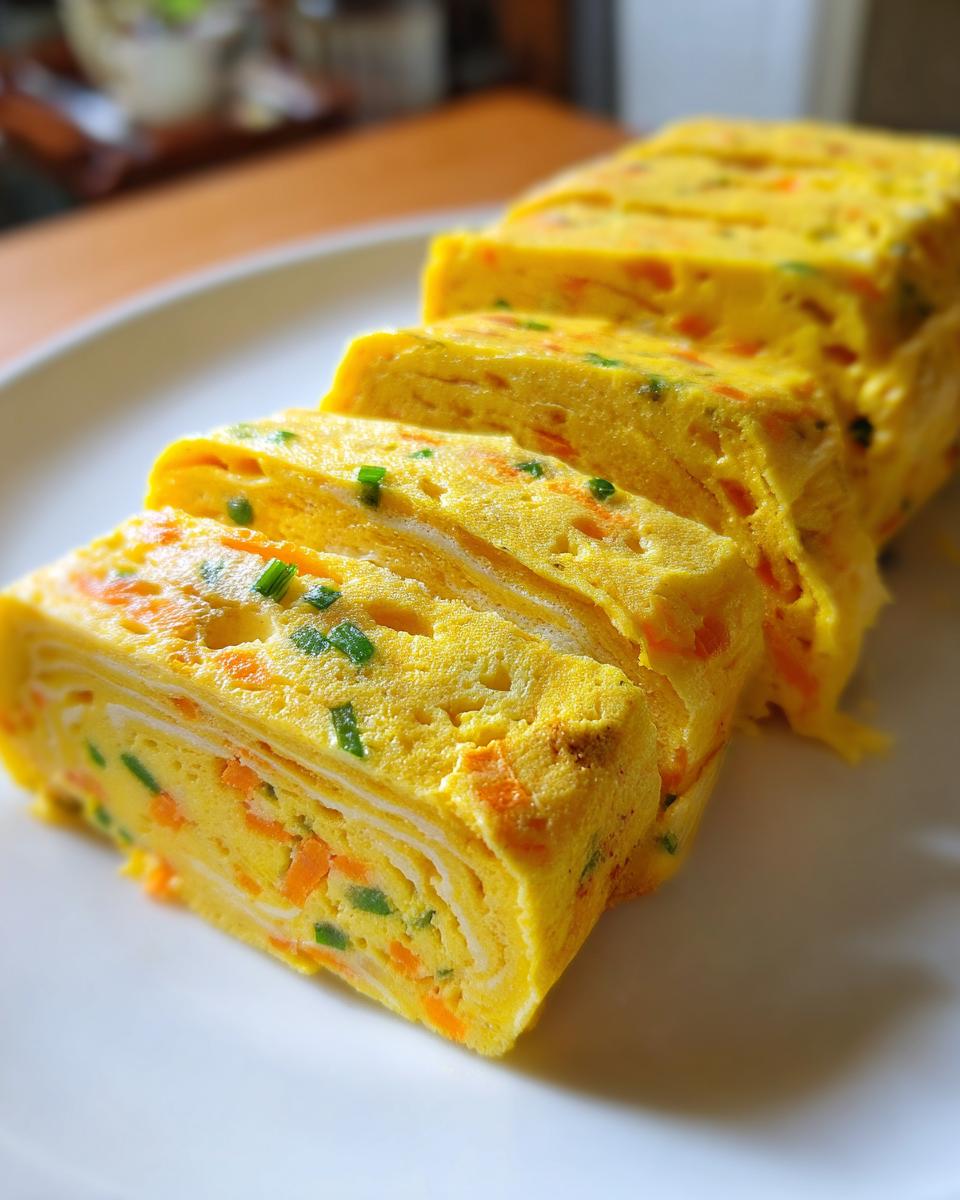
Gathering Ingredients for Your Korean Rolled Omelette (Gyeran Mari)
Before we dive into the rolling magic, we need to talk about the components. Getting your prep right here is half the battle won for the Korean Rolled Omelette (Gyeran Mari). Don’t just grab your veggies—you have to treat them right! If your carrots and onions are chunky, the roll will be lumpy and prone to breaking when you try to turn it. Remember, we’re aiming for a tight, beautiful log.
The eggs are the star, of course, and using good quality ones makes a difference. But honestly, the supporting actors—the salt, pepper, and that tiny bit of sugar—are what make this taste like it came straight from a Seoul kitchen. Lay everything out, chop precisely, and you’re ready to go!
Essential Components for Perfect Korean Rolled Omelette (Gyeran Mari)
Here is exactly what you need to gather for the best Korean Rolled Omelette (Gyeran Mari). Pay close attention to how small those vegetables need to be!
| Ingredient | Exact Quantity | Preparation Style |
|---|---|---|
| Green Onion (or Garlic Chives) | 1 tablespoon | Finely chopped |
| Carrot | 1 tablespoon | Finely chopped |
| Yellow Onion | 1 tablespoon | Finely chopped |
| Large Eggs | 4-6 | Beaten thoroughly |
| Kosher Salt | 1/4 teaspoon | Measured |
| Sugar | Small pinch | Measured |
| White Pepper (or Black Pepper) | Small pinch | Measured |
| Neutral-Tasting Oil | 1/2 tablespoon (plus more as needed) | For coating the pan |
Ingredient Notes and Preparation Tips
I can’t stress this enough: chop those vegetables as small as you possibly can. Think almost minced. If you leave them chunky, they create weak spots in the egg sheet, and the omelet will tear when you try to roll it up. We want a smooth, cohesive layer, not a chunky scramble!
Now, about that sugar—it seems odd in an omelet, right? But trust me, that small pinch isn’t there to make the dish sweet. It’s a secret weapon that balances out the savory saltiness and really makes the egg flavor pop. It just brightens everything up. Don’t skip it, but definitely don’t add more than a pinch, or you’ll end up with something strange!
Step-by-Step Guide to Making Korean Rolled Omelette (Gyeran Mari)
Okay, this is where the fun starts! Making the Korean Rolled Omelette (Gyeran Mari) is less about complicated cooking and more about steady hands and patience. We are layering thin sheets of cooked egg, so speed isn’t the goal—evenness is. Grab your best nonstick pan, because this whole process hinges on that surface staying smooth.
Preparation of the Egg Mixture
First things first: get those veggies ready. We already talked about chopping them tiny, so now we mix. In a large bowl—I like using one that’s wide so I can whisk easily—crack in your 4 to 6 eggs. Now, dump in all those finely chopped carrots, onions, and the green onion bits. Don’t forget the seasoning! Add your salt, that tiny pinch of sugar, and the pepper.
Here’s my tip: don’t just stir it gently. You need to beat this mixture until everything is really incorporated. I whisk until I see tiny bubbles starting to form. We want the vegetables suspended evenly throughout the egg so that every time we pour a layer, it has all the flavor components locked in.
Cooking the First Layer of Your Korean Rolled Omelette (Gyeran Mari)
Time for the heat. You absolutely must use low heat here. If your pan is too hot, the bottom layer will burn before the top gets even slightly set, and you won’t be able to roll it. Pour just half a tablespoon of oil into your nonstick pan. Then, take a paper towel and wipe the oil around. Seriously, wipe most of it out! We just want a barely-there slick coating.
Heat the pan gently. When it’s warm—not sizzling hot—pour in about one-third of your egg mixture. Tilt the pan quickly so the egg spreads out into a very thin, even circle. Let this cook for maybe 30 seconds. You want the edges firm and the very top just barely wet, like tacky skin, not runny liquid.
Rolling Technique for Beautiful Layers
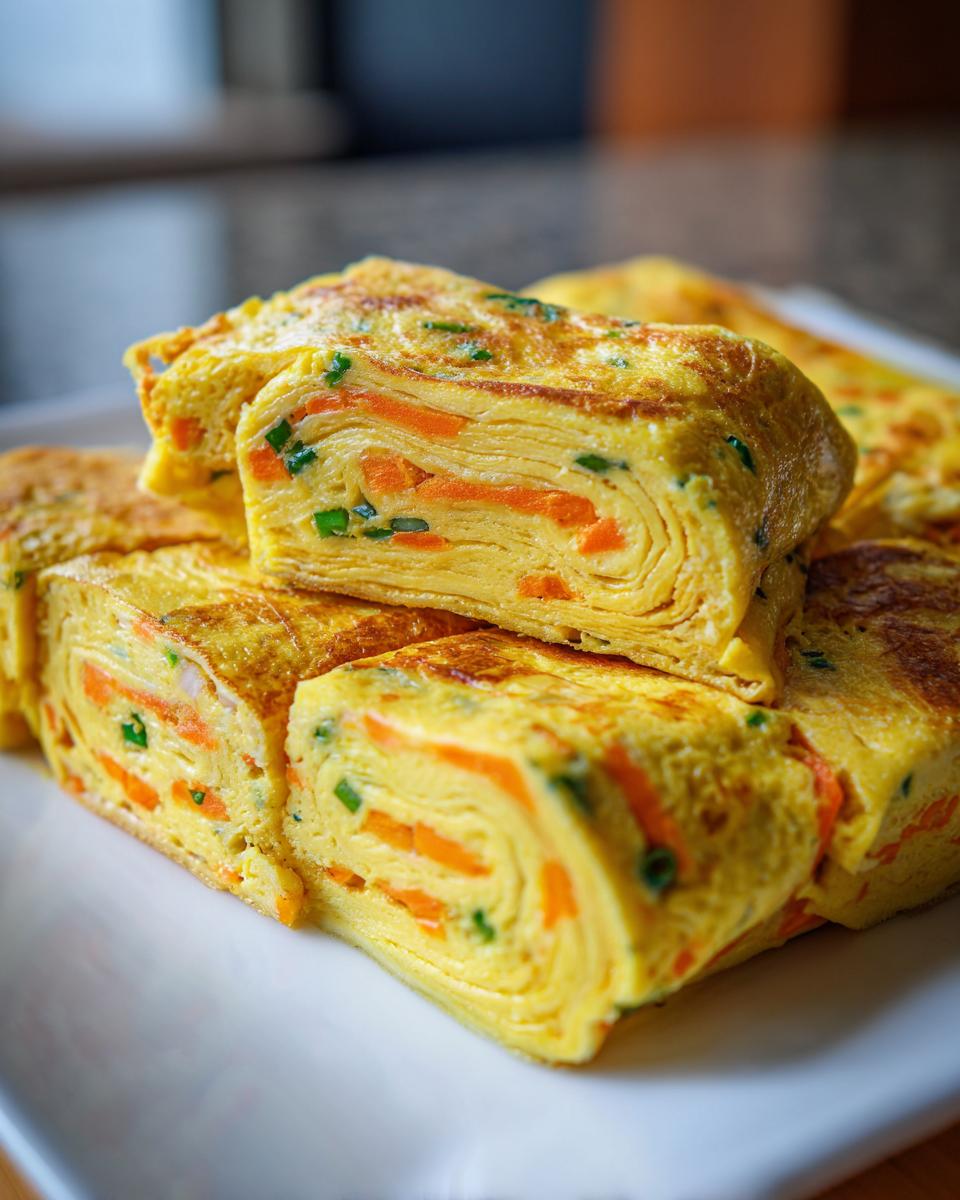
This is the moment of truth for your Korean Rolled Omelette (Gyeran Mari)! Take two sturdy spoons—one in each hand—and gently lift the edge of the cooked egg closest to you. Start rolling it slowly toward the opposite side of the pan, creating a tight little log. Once the first layer is rolled, push that log over to the near edge of the pan.
Now, use your paper towel to lightly grease the empty space in the pan. Pour in the next third of your egg mixture, tilting the pan so the new liquid egg flows underneath the existing log. Let this cook until it sets but the top is still slightly wet, just like before. When it’s ready, use your spoons to roll the existing log right over this new layer. Keep going, rolling the growing omelet over the fresh egg!
Finishing and Setting the Korean Rolled Omelette (Gyeran Mari)
Repeat that process one last time with the final bit of egg mixture. Once the entire omelet is rolled up into one thick log, it might look a little pale. To give your Korean Rolled Omelette (Gyeran Mari) that lovely, slightly golden exterior that pops on the plate, gently roll the whole thing around the pan for about 30 seconds on each side. This just gives it a nice final sear. Don’t cook it too long, or it will dry out inside!
When you’re happy with the color, slide that beautiful egg roll onto a cutting board. Don’t slice it right away! Let it rest for at least two minutes. This lets the internal steam settle, which keeps the layers perfectly intact when you cut into it.
Tips for Success with Your Korean Rolled Omelette (Gyeran Mari)
I’ve made this recipe dozens of times, and I know exactly where people usually run into trouble when trying to make the perfect Korean Rolled Omelette (Gyeran Mari). It all comes down to heat management and how you handle the rolling tool. Follow these four pointers, and you’ll be rolling like a pro!
- Keep That Heat Low and Steady: This is the most important thing. If you try to rush this by cranking up the stove, the bottom layer will become rubbery and brown before the top layer has time to bond with it. Low heat allows you to cook thin layers evenly so they remain pliable for rolling.
- Don’t Overcrowd the Pan: Only pour in enough egg mixture to create a thin layer that covers the bottom, usually about a third of your total mix. If the layer is too thick, it won’t cook through fast enough at the edges, and you’ll end up with a floppy, unmanageable mess instead of a tight roll.
- Use Tools That Don’t Tear: I know some recipes suggest chopsticks, but I swear by two wooden or silicone-tipped spoons. They allow you to gently lift and guide the egg sheet without piercing it. Think of rolling it as guiding a blanket, not flipping a pancake.
- The “Wet Top” Rule: Always wait until the top layer of egg is set enough that it doesn’t stick to the pan, but still has a slight sheen or dampness. If you wait too long, the new egg mixture won’t seal onto the older layer, and your beautiful roll will unravel when you try to slice it later.
Storing and Serving Your Egg Roll
You’ve done the hard work, and you have this gorgeous, layered egg roll sitting on your cutting board. Now we need to make sure it looks just as good on the plate as it tasted coming off the pan!
Slicing and Serving Suggestions
Remember how I told you to let it rest for two minutes after taking it off the heat? That small pause is crucial! If you slice it immediately, the steam trapped inside rushes out, and the layers can sometimes get a little squished or separate. Wait those two minutes, and then grab your sharpest knife.
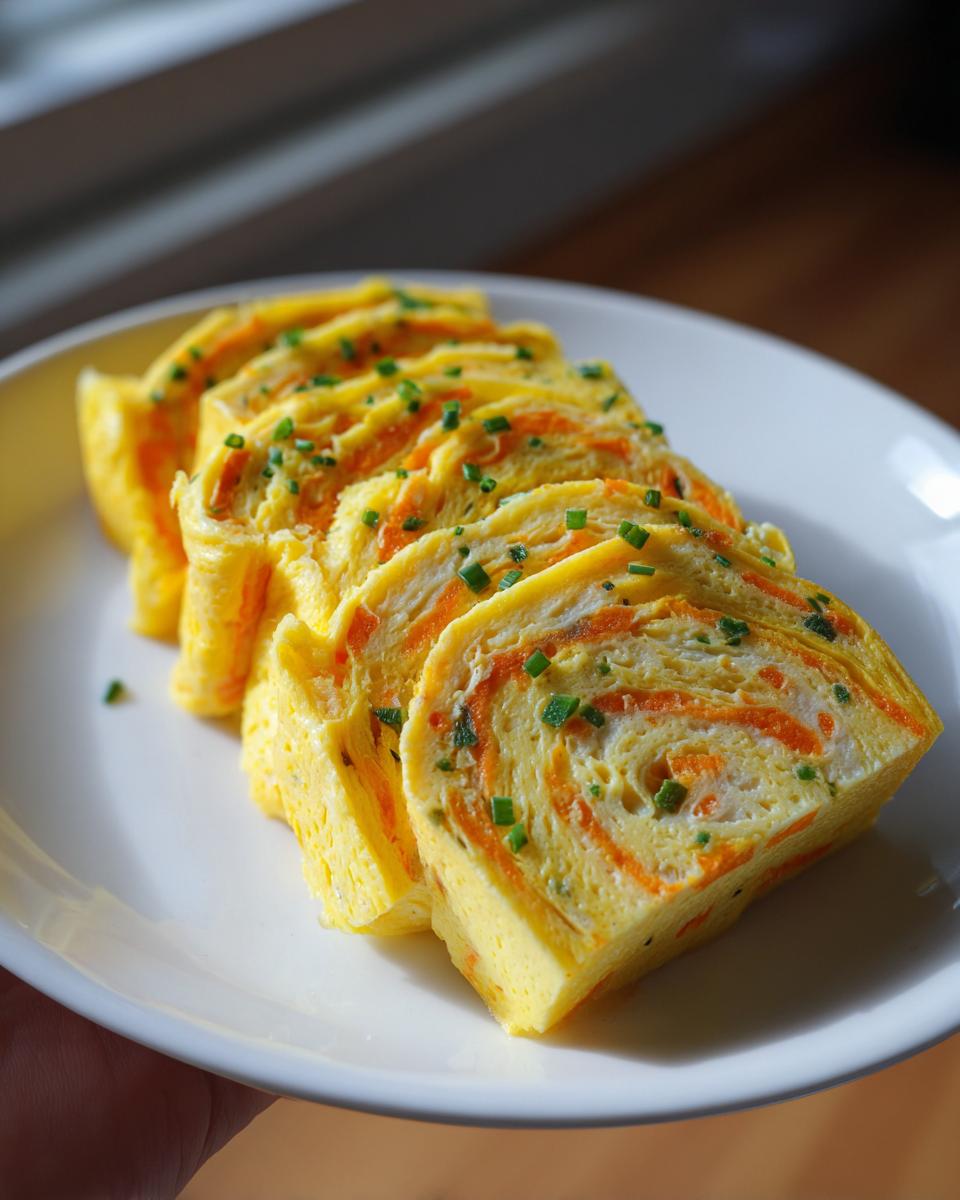
I usually slice the roll into about one-inch thick pieces. They stand up beautifully on a plate, showing off those colorful veggie layers. For serving, keep it simple, just like they do in Korea. A little drizzle of ketchup is my kids’ favorite—it’s sweet and tangy against the savory egg. If you want something a bit more traditional, mix up a tiny dipping sauce: a splash of soy sauce, a drop of sesame oil, and maybe a sprinkle of toasted sesame seeds.
Storing Leftover Korean Rolled Omelette
This dish is best eaten fresh, but leftovers are totally fine! Because it’s mostly egg, you don’t want to keep it around for ages. I find that within 2 days it’s still fantastic, especially if you pack it tightly so it doesn’t absorb any fridge odors.
You can store leftovers in an airtight container in the refrigerator. I wouldn’t recommend freezing this one, though; the texture of the egg changes too much once thawed. Reheating is best done quickly!
| Storage Location | Duration | Reheating Method |
|---|---|---|
| Refrigerator | Up to 2 days | Microwave briefly (15-20 seconds) or eat cold. |
| Freezer | Not recommended | Texture suffers upon thawing. |
Frequently Asked Questions About Korean Rolled Omelette (Gyeran Mari)
I always get questions when I post pictures of my rolls, so I figured I’d tackle the most common ones right here. Hopefully, this helps you feel super confident when you make your first Korean Rolled Omelette (Gyeran Mari)!
Q1. Why is my rolled omelette falling apart instead of staying tight?
This usually happens because your heat was too high, or you waited too long between pouring layers. The egg needs to be slightly wet on top so that the new layer sticks to the old one when you roll it. If the top is fully cooked, it just slides off instead of sealing.
Q2. Can I make this without adding any vegetables?
You absolutely can! If you aren’t a fan of the tiny carrot bits or onions, you can skip them entirely. However, remember that those vegetables not only add color but also help keep the texture interesting. If you leave them out, just make sure you still add the salt and sugar to season the plain egg mixture well.
Q3. What’s the secret to getting that bright yellow color in my Gyeran Mari?
The color is mostly down to the eggs you use, but a tiny pinch of white pepper helps keep the overall mixture from looking dull. Also, don’t overcook it! If you let the log sear for too long at the end, the beautiful yellow turns into a heavy brown. Just a quick 30 seconds per side is all you need for a nice golden kiss.
Q4. How important is the type of pan for this egg roll?
It is incredibly important! You really need a good quality nonstick pan. If your pan has any scratches or spots where the egg sticks, the omelet will tear the moment you try to roll it. A well-seasoned cast iron pan might work if you use a generous amount of oil, but for beginners making Korean Rolled Omelette (Gyeran Mari), stick to your best nonstick skillet.
Share Your Experience Making Korean Rolled Omelette (Gyeran Mari)
Now it’s your turn! I hope you found this guide helpful for mastering your first Korean Rolled Omelette (Gyeran Mari). Did your layers turn out perfectly tight? Tell me how you served yours in the comments below! I love seeing your creations, so please rate the recipe and share your photos!
Print
Korean Rolled Omelette: 1 Joyful Minute Skill
- Total Time: 20 minutes
- Yield: 4 servings
- Diet: Vegetarian
Description
Daniel here from Reciqa. Cooking brings people together, and I aim to share dishes that create those warm moments. This Korean Rolled Omelette (Gyeran Mari) is simple, satisfying, and a great addition to any meal. Follow these steps to make a beautiful, layered egg roll.
Ingredients
- 1 tbsp finely chopped green onion (or garlic chives)
- 1 tbsp finely chopped carrot
- 1 tbsp finely chopped yellow onion
- 4-6 large eggs
- 1/4 tsp kosher salt
- Small pinch of sugar
- Small pinch of white pepper (or black pepper)
- 1/2 tbsp neutral-tasting oil, plus more if needed
- Ketchup (optional), to serve
Instructions
- Finely chop the green onion, carrot, and onion as small as you can. Small pieces help the omelette roll smoothly and ensure flavor in every bite.
- In a large container, beat the eggs. Mix in the chopped vegetables, salt, sugar, and pepper thoroughly. The small amount of sugar balances the savory flavors.
- Add 1/2 tablespoon of oil to a nonstick pan. Use a paper towel to spread the oil evenly, wiping away any extra. Heat the pan over low heat.
- When the pan is warm, pour about one-third of the egg mixture into the pan. Tilt the pan quickly to make a thin, even layer. Cook for about 30 seconds until the bottom sets but the top remains slightly wet.
- Using two spoons, carefully roll the egg layer from the bottom edge toward you. Once rolled, push the omelet log to the lower section of the pan. Lightly oil the exposed pan surface.
- Pour another one-third of the egg mixture into the empty space, spreading it thinly. Cook for 30 seconds, then roll the existing omelet log over the new egg layer.
- Repeat this process with the final portion of the egg mixture. After the last roll, lightly sear the entire omelet on all sides for about 30 seconds per side until it achieves a light golden-brown color.
- Transfer the finished Korean Rolled Omelette to a cutting board. Let it rest for 2 minutes before slicing.
- Slice the roll into bite-sized pieces and arrange them on a plate. Serve plain or with ketchup on the side.
Notes
- Chop the vegetables very finely. This makes rolling easier.
- The sugar in the mixture enhances the overall taste; it does not sweeten the omelet significantly.
- Prep Time: 10 minutes
- Cook Time: 10 minutes
- Category: Main Dish
- Method: Pan-Fried/Rolled
- Cuisine: Korean