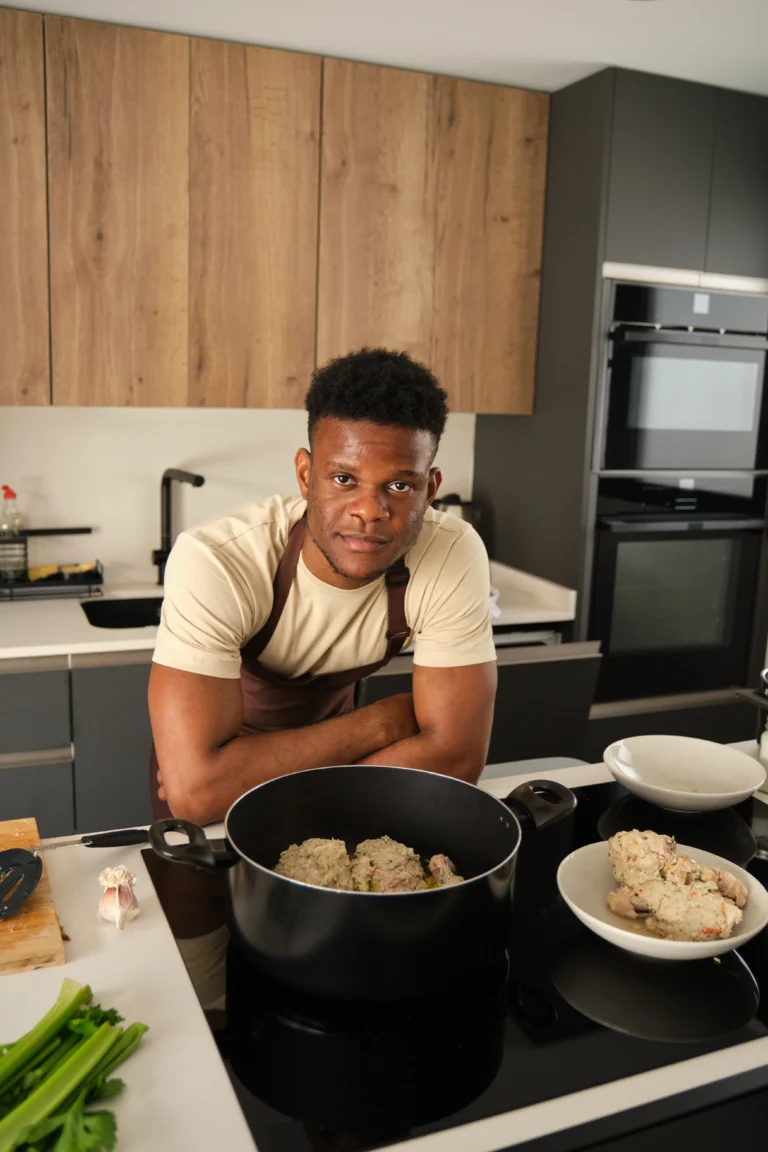

There’s nothing quite like the smell of something sweet baking on a dreary Tuesday afternoon to lift the spirits, you know? Sometimes you just need that easy, comforting treat that doesn’t require fancy techniques or a million bowls. That’s exactly the kind of food I love sharing here at Reciqa. I’m Daniel, and I started this little spot because I truly believe cooking should be joyful, not stressful. It’s about those simple moments—like pulling a tray of perfectly golden Coconut Macaroons out of the oven.
These little mounds of toasted coconut are my go-to when I need a quick win in the kitchen. They deliver that satisfying chewiness inside and that lovely crispness on the outside. Forget fussy cookies; these macaroons are pure, unadulterated comfort food, and I’m going to show you how I make them chewy every single time.
Gather Your Ingredients for Perfect Coconut Macaroons
The beauty of this recipe is how few ingredients it needs! Seriously, you probably have most of this sitting in your pantry right now. But listen, when you only have a handful of components, they really need to be the right ones. I learned the hard way that you can’t just swap out coconut types willy-nilly, or you end up with something brittle instead of chewy. Pay close attention to the measurements here, especially for the binder.
Essential Components for Chewy Coconut Macaroons
We need four core elements for the structure and flavor. The flour is crucial—don’t skip it! It helps hold everything together so they don’t just fall apart. Make sure you’re using standard shredded coconut, not the big, rough flaked kind, for the best texture.
| Ingredient | Amount | Notes |
|---|---|---|
| Shredded Coconut | 3 cups (240g) | Must be shredded, not flaked! |
| Granulated Sugar | 1/2 cup (100g) | For sweetness and texture |
| All-Purpose Flour | 1/4 cup (32g) | Acts as a crucial binder |
| Salt | 1/4 teaspoon | Just a pinch to balance the sweet |
| Large Egg Whites | 4 | Must be separated from the yolks |
| Vanilla Extract | 1 teaspoon | For that classic warm flavor |
Equipment Needed for Your Coconut Macaroons
You don’t need a stand mixer for this one, which is why I love it for quick baking! Grab a couple of large mixing bowls—one for the dry, one for the wet. You’ll definitely want parchment paper to line those baking sheets; trust me, these like to stick if you try to bake them directly on metal. A whisk and a sturdy spatula for folding are the only other must-haves.
Step-by-Step Method to Bake Coconut Macaroons
Okay, let’s get baking! This is where the magic happens, and it moves pretty fast once you get going. The secret to great Coconut Macaroons is making sure you combine things thoroughly but gently. We’re building a chewy texture, not a tough one, so pay attention to how you mix!
Preparing the Dry Base for Your Coconut Macaroons
First things first: get that oven preheated to 325°F (163°C) and line those baking sheets with parchment paper. Don’t wait until the end! In your biggest bowl, toss in the shredded coconut, the granulated sugar, that small amount of flour, and the salt. Now, take a whisk or a big spoon and mix this dry blend really well. You want the flour distributed evenly throughout the coconut so every bite gets that perfect structure.
Creating the Egg White Binder
In a separate, clean bowl—and I mean clean, fat hates egg whites—whisk your four egg whites. You’re not looking for stiff peaks here; that’s for meringue! Just whisk them until they get nice and frothy, kind of foamy like the top of a good latte. Once they look foamy, splash in your vanilla extract and give it one last quick whisk to combine.
Combining and Shaping the Coconut Macaroons
Now, pour that frothy egg white mixture right over your coconut blend. This is the crucial folding step! Use your spatula and gently fold everything together. I mean gently. You are just trying to coat the coconut; if you beat it up, you’ll deflate all that air you just whipped into the whites, and your macaroons will be flat hockey pucks. Once it’s just combined—you might see a few dry streaks and that’s okay—it’s ready to scoop.
Baking Time and Visual Cues for Coconut Macaroons
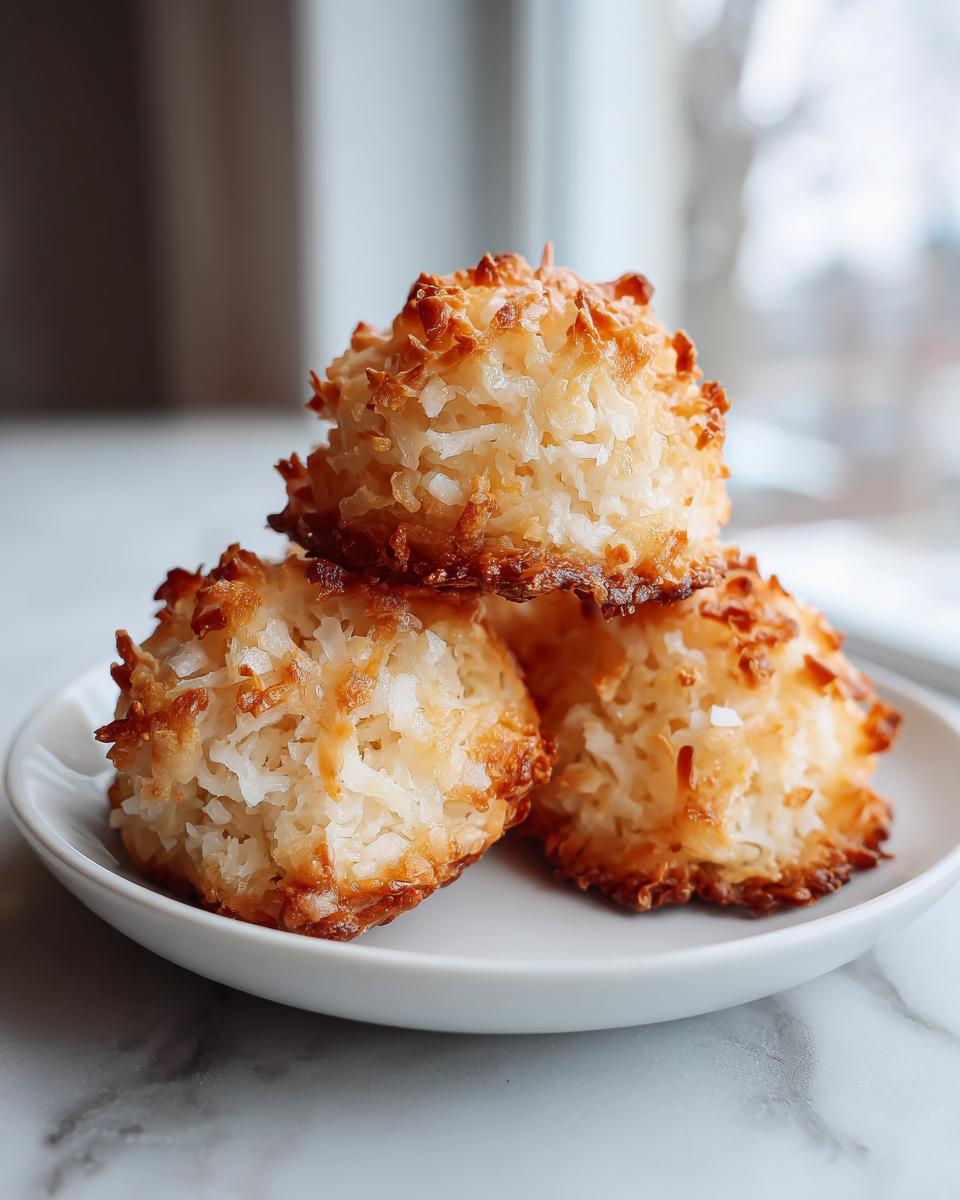
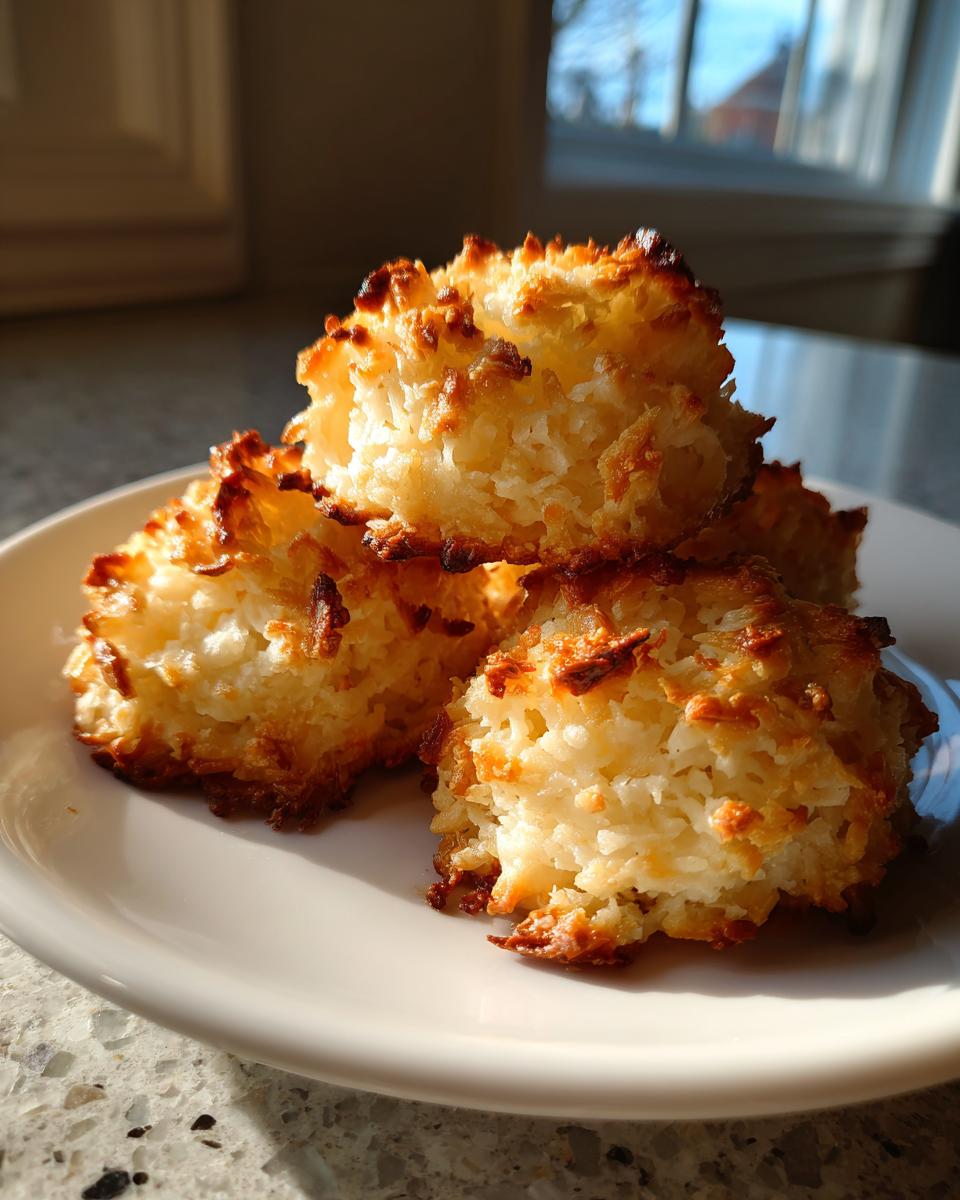
Using a spoon or a small cookie scoop, drop little mounds onto your lined baking sheets. Don’t worry about making them perfectly uniform; those rustic shapes are part of their charm! Pop them into your preheated oven for about 20 to 25 minutes. Keep an eye on them after the 20-minute mark. They are done when the tops are beautifully golden brown. If they look pale, give them another two minutes. They will firm up as they cool down.
Tips for Achieving Expert Coconut Macaroons Texture
The difference between a good macaroon and an absolutely amazing one is all in the details, honestly. My goal for these Coconut Macaroons is always that beautiful textural contrast: crispy edge, gooey center. If yours come out dry, you probably overbaked them, or maybe your oven runs hot, so check early next time!
The flour is non-negotiable; it’s the glue that keeps the coconut moist and stops the egg whites from weeping out during baking. Also, don’t try to use sweetened coconut! Sweetened coconut already has liquid added, and it throws off the ratio with the egg whites, leading to a soggy bottom. Stick to the unsweetened shredded kind and control the sweetness with the measured sugar.
Another pro tip: Let the batter rest for about 10 minutes before scooping. This gives the shredded coconut a chance to really absorb some of that liquid from the egg whites. It seems small, but it makes a huge difference in the final chewiness!
Frequently Asked Questions About Coconut Macaroons
I get so many messages about why these sometimes come out too soft or too hard. It’s usually a simple fix, so let’s go over the common hiccups I see readers run into when making these easy desserts.
Can I make these Coconut Macaroons without flour?
You technically can, but they won’t be the same! The flour in this recipe is essential because it acts as a stabilizer for the egg whites and absorbs just enough moisture to create that dense, chewy interior. If you skip it, you’re basically making a meringue-heavy coconut cluster, which will be much crunchier and more prone to crumbling. For this specific recipe, keep that flour in!
How do I get my Coconut Macaroons extra chewy?
Chewiness is all about not overdoing it in the oven. Pull them out right when the edges are golden brown. If you wait until the whole top is deep brown, you’ve baked out all the moisture. Also, make sure you are using unsweetened coconut, as I mentioned before. That extra sugar in sweetened coconut makes them bake faster and dry out quicker.
What is the best way to store leftover Coconut Macaroons?
This is important! You want to keep that chew intact. Store your finished macaroons in an airtight container. Don’t put them in the fridge! The cold air dries them out surprisingly fast. They honestly taste better on day two when they’ve settled, as long as they are sealed up tight at room temperature.
Storing and Keeping Your Coconut Macaroons Fresh
If you manage to have any leftover—which I doubt, because these disappear fast!—storage is simple. Remember, the enemy of chewiness is air! Pop them into a truly airtight container. I love using those glass containers with the snap-on lids.
They stay perfectly soft and chewy at room temperature for about three to four days. If you need to keep them longer, you can freeze them! Lay them flat on a tray lined with parchment paper, freeze until solid, and then transfer them to a freezer bag. They thaw out perfectly in about 20 minutes on the counter. No need for reheating, honestly, room temperature is best for that perfect bite!
| Storage Method | Duration | Key Tip |
|---|---|---|
| Airtight Container (Room Temp) | 3–4 Days | Avoid refrigeration to maintain moisture. |
| Freezer (Airtight Bag) | Up to 2 Months | Thaw on counter for 20 minutes. |
Sharing Your Delicious Coconut Macaroons Results
I really hope you loved how simple this recipe was! These Coconut Macaroons are such a happy little dessert. Let me know down in the comments if you tried them, and please tell me how they turned out! A rating helps other bakers know they can trust this recipe too!
Gather Your Ingredients for Perfect Coconut Macaroons
The beauty of this recipe is how few ingredients it needs! Seriously, you probably have most of this sitting in your pantry right now. But listen, when you only have a handful of components, they really need to be the right ones. I learned the hard way that you can’t just swap out coconut types willy-nilly, or you end up with something brittle instead of chewy. Pay close attention to the measurements here, especially for the binder.
Essential Components for Chewy Coconut Macaroons
We need four core elements for the structure and flavor. The flour is crucial—don’t skip it! It helps hold everything together so they don’t just fall apart. Make sure you’re using standard shredded coconut, not the big, rough flaked kind, for the best texture.
| Ingredient | Amount | Notes |
|---|---|---|
| Shredded Coconut | 3 cups (240g) | Must be shredded, not flaked! |
| Granulated Sugar | 1/2 cup (100g) | For sweetness and texture |
| All-Purpose Flour | 1/4 cup (32g) | Acts as a crucial binder |
| Salt | 1/4 teaspoon | Just a pinch to balance the sweet |
| Large Egg Whites | 4 | Must be separated from the yolks |
| Vanilla Extract | 1 teaspoon | For that classic warm flavor |
Equipment Needed for Your Coconut Macaroons
You don’t need a stand mixer for this one, which is why I love it for quick baking! Grab a couple of large mixing bowls—one for the dry, one for the wet. You’ll definitely want parchment paper to line those baking sheets; trust me, these like to stick if you try to bake them directly on metal. A whisk and a sturdy spatula for folding are the only other must-haves.
Step-by-Step Method to Bake Coconut Macaroons
Okay, let’s get baking! This is where the magic happens, and it moves pretty fast once you get going. The secret to great Coconut Macaroons is making sure you combine things thoroughly but gently. We’re building a chewy texture, not a tough one, so pay attention to how you mix!
Preparing the Dry Base for Your Coconut Macaroons
First things first: get that oven preheated to 325°F (163°C) and line those baking sheets with parchment paper. Don’t wait until the end! In your biggest bowl, toss in the shredded coconut, the granulated sugar, that small amount of flour, and the salt. Now, take a whisk or a big spoon and mix this dry blend really well. You want the flour distributed evenly throughout the coconut so every bite gets that perfect structure.
Creating the Egg White Binder
In a separate, clean bowl—and I mean clean, fat hates egg whites—whisk your four egg whites. You’re not looking for stiff peaks here; that’s for meringue! Just whisk them until they get nice and frothy, kind of foamy like the top of a good latte. Once they look foamy, splash in your vanilla extract and give it one last quick whisk to combine.
Combining and Shaping the Coconut Macaroons
Now, pour that frothy egg white mixture right over your coconut blend. This is the crucial folding step! Use your spatula and gently fold everything together. I mean gently. You are just trying to coat the coconut; if you beat it up, you’ll deflate all that air you just whipped into the whites, and your macaroons will be flat hockey pucks. Once it’s just combined—you might see a few dry streaks and that’s okay—it’s ready to scoop.
Baking Time and Visual Cues for Coconut Macaroons
Using a spoon or a small cookie scoop, drop little mounds onto your lined baking sheets. Don’t worry about making them perfectly uniform; those rustic shapes are part of their charm! Pop them into your preheated oven for about 20 to 25 minutes. Keep an eye on them after the 20-minute mark. They are done when the tops are beautifully golden brown. If they look pale, give them another two minutes. They will firm up as they cool down.
Tips for Achieving Expert Coconut Macaroons Texture
The difference between a good macaroon and an absolutely amazing one is all in the details, honestly. My goal for these Coconut Macaroons is always that beautiful textural contrast: crispy edge, gooey center. If yours come out dry, you probably overbaked them, or maybe your oven runs hot, so check early next time!
The flour is non-negotiable; it’s the glue that keeps the coconut moist and stops the egg whites from weeping out during baking. Also, don’t try to use sweetened coconut! Sweetened coconut already has liquid added, and it throws off the ratio with the egg whites, leading to a soggy bottom. Stick to the unsweetened shredded kind and control the sweetness with the measured sugar.
Another pro tip: Let the batter rest for about 10 minutes before scooping. This gives the shredded coconut a chance to really absorb some of that liquid from the egg whites. It seems small, but it makes a huge difference in the final chewiness!
Frequently Asked Questions About Coconut Macaroons
I get so many messages about why these sometimes come out too soft or too hard. It’s usually a simple fix, so let’s go over the common hiccups I see readers run into when making these easy desserts.
Can I make these Coconut Macaroons without flour?
You technically can, but they won’t be the same! The flour in this recipe is essential because it acts as a stabilizer for the egg whites and absorbs just enough moisture to create that dense, chewy interior. If you skip it, you’re basically making a meringue-heavy coconut cluster, which will be much crunchier and more prone to crumbling. For this specific recipe, keep that flour in!
How do I get my Coconut Macaroons extra chewy?
Chewiness is all about not overdoing it in the oven. Pull them out right when the edges are golden brown. If you wait until the whole top is deep brown, you’ve baked out all the moisture. Also, make sure you are using unsweetened coconut, as I mentioned before. That extra sugar in sweetened coconut makes them bake faster and dry out quicker.
What is the best way to store leftover Coconut Macaroons?
This is important! You want to keep that chew intact. Store your finished macaroons in an airtight container. Don’t put them in the fridge! The cold air dries them out surprisingly fast. They honestly taste better on day two when they’ve settled, as long as they are sealed up tight at room temperature.
Storing and Keeping Your Coconut Macaroons Fresh
If you manage to have any leftover—which I doubt, because these disappear fast!—storage is simple. Remember, the enemy of chewiness is air! Pop them into a truly airtight container. I love using those glass containers with the snap-on lids.
They stay perfectly soft and chewy at room temperature for about three to four days. If you need to keep them longer, you can freeze them! Lay them flat on a tray lined with parchment paper, freeze until solid, and then transfer them to a freezer bag. They thaw out perfectly in about 20 minutes on the counter. No need for reheating, honestly, room temperature is best for that perfect bite!
| Storage Method | Duration | Key Tip |
|---|---|---|
| Airtight Container (Room Temp) | 3–4 Days | Avoid refrigeration to maintain moisture. |
| Freezer (Airtight Bag) | Up to 2 Months | Thaw on counter for 20 minutes. |
Sharing Your Delicious Coconut Macaroons Results
I really hope you loved how simple this recipe was! These Coconut Macaroons are such a happy little dessert. Let me know down in the comments if you tried them, and please tell me how they turned out! A rating helps other bakers know they can trust this recipe too!
Gather Your Ingredients for Perfect Coconut Macaroons
The beauty of this recipe is how few ingredients it needs! Seriously, you probably have most of this sitting in your pantry right now. But listen, when you only have a handful of components, they really need to be the right ones. I learned the hard way that you can’t just swap out coconut types willy-nilly, or you end up with something brittle instead of chewy. Pay close attention to the measurements here, especially for the binder.
Essential Components for Chewy Coconut Macaroons
We need four core elements for the structure and flavor. The flour is crucial—don’t skip it! It helps hold everything together so they don’t just fall apart. Make sure you’re using standard shredded coconut, not the big, rough flaked kind, for the best texture.
| Ingredient | Amount | Notes |
|---|---|---|
| Shredded Coconut | 3 cups (240g) | Must be shredded, not flaked! |
| Granulated Sugar | 1/2 cup (100g) | For sweetness and texture |
| All-Purpose Flour | 1/4 cup (32g) | Acts as a crucial binder |
| Salt | 1/4 teaspoon | Just a pinch to balance the sweet |
| Large Egg Whites | 4 | Must be separated from the yolks |
| Vanilla Extract | 1 teaspoon | For that classic warm flavor |
Equipment Needed for Your Coconut Macaroons
You don’t need a stand mixer for this one, which is why I love it for quick baking! Grab a couple of large mixing bowls—one for the dry, one for the wet. You’ll definitely want parchment paper to line those baking sheets; trust me, these like to stick if you try to bake them directly on metal. A whisk and a sturdy spatula for folding are the only other must-haves.
Step-by-Step Method to Bake Coconut Macaroons
Okay, let’s get baking! This is where the magic happens, and it moves pretty fast once you get going. The secret to great Coconut Macaroons is making sure you combine things thoroughly but gently. We’re building a chewy texture, not a tough one, so pay attention to how you mix!
Preparing the Dry Base for Your Coconut Macaroons
First things first: get that oven preheated to 325°F (163°C) and line those baking sheets with parchment paper. Don’t wait until the end! In your biggest bowl, toss in the shredded coconut, the granulated sugar, that small amount of flour, and the salt. Now, take a whisk or a big spoon and mix this dry blend really well. You want the flour distributed evenly throughout the coconut so every bite gets that perfect structure.
Creating the Egg White Binder
In a separate, clean bowl—and I mean clean, fat hates egg whites—whisk your four egg whites. You’re not looking for stiff peaks here; that’s for meringue! Just whisk them until they get nice and frothy, kind of foamy like the top of a good latte. Once they look foamy, splash in your vanilla extract and give it one last quick whisk to combine.
Combining and Shaping the Coconut Macaroons
Now, pour that frothy egg white mixture right over your coconut blend. This is the crucial folding step! Use your spatula and gently fold everything together. I mean gently. You are just trying to coat the coconut; if you beat it up, you’ll deflate all that air you just whipped into the whites, and your macaroons will be flat hockey pucks. Once it’s just combined—you might see a few dry streaks and that’s okay—it’s ready to scoop.
Baking Time and Visual Cues for Coconut Macaroons
Using a spoon or a small cookie scoop, drop little mounds onto your lined baking sheets. Don’t worry about making them perfectly uniform; those rustic shapes are part of their charm! Pop them into your preheated oven for about 20 to 25 minutes. Keep an eye on them after the 20-minute mark. They are done when the tops are beautifully golden brown. If they look pale, give them another two minutes. They will firm up as they cool down.
Tips for Achieving Expert Coconut Macaroons Texture
The difference between a good macaroon and an absolutely amazing one is all in the details, honestly. My goal for these Coconut Macaroons is always that beautiful textural contrast: crispy edge, gooey center. If yours come out dry, you probably overbaked them, or maybe your oven runs hot, so check early next time!
The flour is non-negotiable; it’s the glue that keeps the coconut moist and stops the egg whites from weeping out during baking. Also, don’t try to use sweetened coconut! Sweetened coconut already has liquid added, and it throws off the ratio with the egg whites, leading to a soggy bottom. Stick to the unsweetened shredded kind and control the sweetness with the measured sugar.
Another pro tip: Let the batter rest for about 10 minutes before scooping. This gives the shredded coconut a chance to really absorb some of that liquid from the egg whites. It seems small, but it makes a huge difference in the final chewiness!
Frequently Asked Questions About Coconut Macaroons
I get so many messages about why these sometimes come out too soft or too hard. It’s usually a simple fix, so let’s go over the common hiccups I see readers run into when making these easy desserts.
Can I make these Coconut Macaroons without flour?
You technically can, but they won’t be the same! The flour in this recipe is essential because it acts as a stabilizer for the egg whites and absorbs just enough moisture to create that dense, chewy interior. If you skip it, you’re basically making a meringue-heavy coconut cluster, which will be much crunchier and more prone to crumbling. For this specific recipe, keep that flour in!
How do I get my Coconut Macaroons extra chewy?
Chewiness is all about not overdoing it in the oven. Pull them out right when the edges are golden brown. If you wait until the whole top is deep brown, you’ve baked out all the moisture. Also, make sure you are using unsweetened coconut, as I mentioned before. That extra sugar in sweetened coconut makes them bake faster and dry out quicker.
What is the best way to store leftover Coconut Macaroons?
This is important! You want to keep that chew intact. Store your finished macaroons in an airtight container. Don’t put them in the fridge! The cold air dries them out surprisingly fast. They honestly taste better on day two when they’ve settled, as long as they are sealed up tight at room temperature.
Storing and Keeping Your Coconut Macaroons Fresh
If you manage to have any leftover—which I doubt, because these disappear fast!—storage is simple. Remember, the enemy of chewiness is air! Pop them into a truly airtight container. I love using those glass containers with the snap-on lids.
They stay perfectly soft and chewy at room temperature for about three to four days. If you need to keep them longer, you can freeze them! Lay them flat on a tray lined with parchment paper, freeze until solid, and then transfer them to a freezer bag. They thaw out perfectly in about 20 minutes on the counter. No need for reheating, honestly, room temperature is best for that perfect bite!
| Storage Method | Duration | Key Tip |
|---|---|---|
| Airtight Container (Room Temp) | 3–4 Days | Avoid refrigeration to maintain moisture. |
| Freezer (Airtight Bag) | Up to 2 Months | Thaw on counter for 20 minutes. |
Sharing Your Delicious Coconut Macaroons Results
I really hope you loved how simple this recipe was! These Coconut Macaroons are such a happy little dessert. Let me know down in the comments if you tried them, and please tell me how they turned out! A rating helps other bakers know they can trust this recipe too!
Print
4 Tips for Amazing Coconut Macaroons
- Total Time: 40 minutes
- Yield: About 18 macaroons
- Diet: Vegetarian
Description
Chewy Coconut Macaroons. This recipe delivers a delightful, simple dessert with a satisfying chewy interior and lightly toasted exterior.
Ingredients
- 3 cups (240g) shredded coconut
- 1/2 cup (100g) granulated sugar
- 1/4 cup (32g) all-purpose flour
- 1/4 teaspoon salt
- 4 large egg whites
- 1 teaspoon vanilla extract
Instructions
- Preheat your oven to 325℉ (163℃). Line baking sheets with parchment paper.
- In a large bowl, combine the shredded coconut, granulated sugar, all-purpose flour, and salt. Mix well.
- Whisk the egg whites and vanilla extract together until they become frothy.
- Gently fold the egg white mixture into the coconut mixture until just combined. Do not overmix.
- Scoop small mounds of the mixture onto the prepared baking sheets.
- Bake for 20 to 25 minutes, or until the macaroons are golden brown.
Notes
- Store your finished macaroons in an airtight container to maintain their chewy texture.
- Prep Time: 15 minutes
- Cook Time: 25 minutes
- Category: Dessert
- Method: Baking
- Cuisine: American